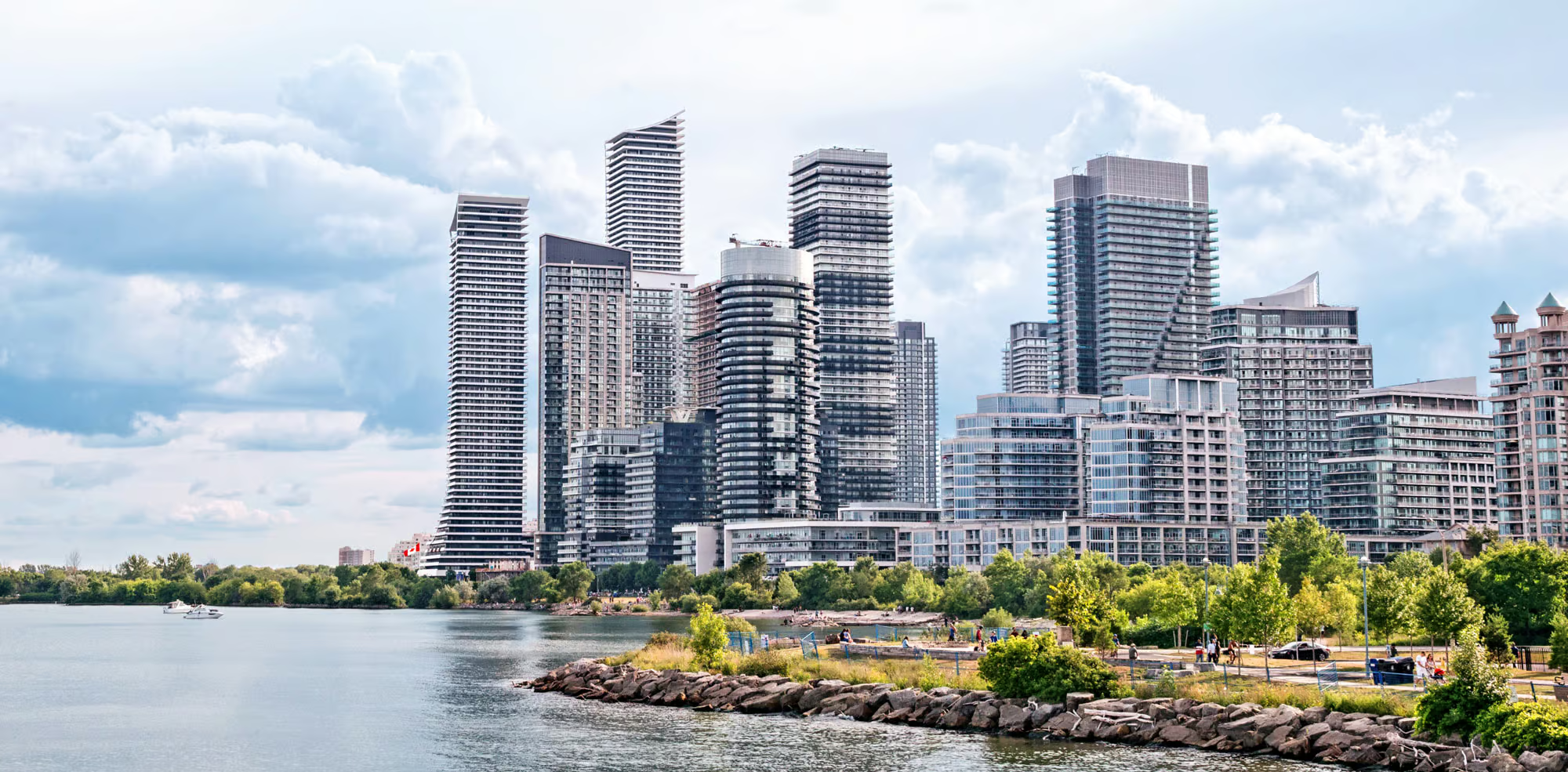


Toronto condos can be a fantastic opportunity for certain home buyers to get into an otherwise challenging market. For empty-nesters, the relatively affordable price point can make for a more financially comfortable retirement.
First-time buyers can often get out of the rental cycle sooner than they believed possible, thanks to lower down payment requirements for many condos. Even some families are selecting larger units due to the maintenance-free lifestyle and building amenities they offer.
If you’re searching for a condo for any reason, you are in a great position. At the time of this writing, Toronto and Etobicoke are well-supplied, there are fewer buyers to compete with, and many sellers are ready to negotiate so they can move on to whatever comes next for them.
Condo purchases are a unique type of real estate transaction, however. There are nuances to be aware of that wouldn’t come up when buying a detached home. In this post, we’ll cover some of the most critical questions you’ll want to ask before you invest in a condo. Let’s go!
Did you know that helping seniors move is one of our specialized services? Whatever your situation, we are here to help streamline your entire transition.
1. Are Most Units Owner-Occupied or Tenanted?
Many potential buyers never think to ask if the other residents in the building are owners or tenants. By all appearances, it shouldn’t make a difference, but it can.
In general, owners take better care of their property, partly to protect their investment, but also out of a sense of pride. The effect can be subtle, yet undeniable.
Those who rent also tend to be more transient. If the building is made up of more tenants than owners, you’ll often encounter people moving in and out, elevator waits can be longer, and you just never know who your new neighbours will be. This could be an advantage or a disadvantage depending on who leaves and who moves in!
A high concentration of tenants may not be a dealbreaker if you love everything else about the building and the condo itself. However, it doesn’t hurt to find out what situation you’ll be moving into.
Are you planning to retire to a condo? Etobicoke just might be the perfect location! Find out why in the posts below:
- Why Retire in Etobicoke, Ontario?
- Our Top Etobicoke Neighbourhoods
- Where Is Mimico?
- Are Prices In Etobicoke Going Down?
2. What Building Amenities Matter Most to You?
A condo in a building with state-of-the-art amenities might sound like a dream come true. Some developers really are going all out in delivering an all-star lifestyle.
- The pool looks like something out of a spa resort.
- A fitness centre has the latest and greatest equipment.
- A party room means you can host gatherings and events with space to spare.
The longer the list of amenities, the more the perceived value of the unit increases, but not so fast. The real question is, are you really going to use these features?
If so, you may have just found your perfect forever home. If not, you’ll end up paying for benefits you never use. In which case, you might want to select a building with fewer amenities and lower maintenance fees.
3. Is the Location Just Right?
Driving in Toronto is often stressful, especially during peak traffic times. Parking can also be expensive, and the whole point of a condo is to enjoy a convenient lifestyle.
Before placing an offer, be sure everything that matters to you is close by, like grocery stores, cafes, restaurants, transit, and green spaces. If you can walk instead of driving to the places you visit frequently, even better!
Your daily commute may also be a factor. The less time getting back and forth to work, the more time you have for the people you love.
Do you plan to sell your home before searching for your Etobicoke condo? The posts below can help you form your strategy:
- How To Add Value To Your Home
- Why Move Out of Your Home While It’s On the Market
- How to Choose a Realtor
- Why List Your Home in a Low-Inventory Market?
4. Where Can I Save Money?
If you do plan to use the building amenities, how can you maximize them to make your condo fees worthwhile? For example, if the building features a fully-equipped fitness centre, you can cancel your gym membership to save a significant monthly expense.
A dedicated locker for your unit also gives you room for seasonal belongings without having to pay for off-site storage. Municipal parking could be another huge savings if you have a designated parking spot.
Many buildings also offer free Wifi in the common areas, potentially saving you money if you are a light Internet user. Be sure you understand all of the perks available to you – and take full advantage of them!
5. What Do Your Maintenance Fees Include?
Speaking of condo fees, it’s important to remember that they are not all equal. Some are more inclusive than others, covering all of your utilities and even cable.
Other buildings may have a lower fee, but leave you responsible for your own water bills. If you’re looking at a pre-construction condo, be sure to examine the Disclosure Statement closely. However, keep in mind that some developers have underestimated the monthly fees, meaning the new owner saw a significant spike shortly after moving in. If you’re considering buying, be sure to have a real estate agent who represents you, not the builder.
6. Are the Elevators Fully Functional?
Slow or out-of-service elevators are something most buyers never even think about, until they are living on the 18th floor and rushing to get to work or to an appointment. It’s not just the impact on your wait time, however.
Poorly functioning elevators could be a sign of lax maintenance. Spend time, and if you get a chance, ask residents how they like living here. You’ll be surprised what people will tell you — good and bad!
Curious about what homes or condos are for sale in Etobicoke? Check out a few of our featured listings.
7. Does the Condo Declaration Allow Pets?
This could be a critical question if you currently rent. Under the Residential Tenancies Act, your landlord cannot forbid you from having a pet. However, the condo corporation is under no such restriction and policies can be strict.
If you have bad allergies or a fear of dogs, a no-pet rule can be reassuring. If you have a big dog who is part of the family, the stipulation is likely a dealbreaker.
8. What Kind of Plumbing Is in the Building?
If a building was constructed from 1995 to 2007, Kitec plumbing is an issue you definitely want to watch out for. This technology was very popular due to its cost-effectiveness.
Unfortunately, it hasn’t stood the test of time and has caused floods. Water damage is bad enough, but it’s not the only problem associated with Kitec plumbing. Insurance companies hate it, and you might have a hard time getting coverage.
Fortunately, many condo corporations in Toronto have been diligent about replacing their entire plumbing systems. However, others are charging owners to replace it, so buyer beware! Check the status certificate carefully for any disclosures.
9. Can I See the Status Certificate?
This brings us to the most important question of all. Always ask to see the Status Certificate. This massive document is full of pertinent information you need to make an informed decision about any building. There is a maximum fee of $100 (not including special rush requests), and usually the seller covers the charge.
We often recommend including a Condition of a Status Certificate Lawyer review before committing to a purchase. The document will highlight critical information about the building’s financial and structural health.
It will also include any mandatory disclosures buried in the fine print, like the presence of Kitec plumbing, for example. A good lawyer should be able to uncover any potential red flags that might be a sign to keep looking. If the Status Certificate comes up clean, you can be more confident about placing an offer.
Looking for even more home buying tips? The posts below can help:
- Everything First Time Buyers Need to Know About Buying a House
- 7 Ways to Prepare to Buy a House
- How Much House Can I Afford in Etobicoke?
- Can You Still Buy a House in Etobicoke for Under $1 Million?
10. How Healthy Are the Reserve Funds?
This point may sound boring, and technically, we already covered it by asking about the Status Certificate. Nevertheless, it’s important enough to go into more detail.
The reserve fund is money set aside to cover any building maintenance projects, such as new elevators or roof repairs. If your building is underfunded, you could get charged a special assessment, which you have no choice in paying what the board deems as your share.
Having your lawyer pay careful attention to the financial section in the Status Certificate is the best way to avoid this predicament.
While on the topic of the reserve fund, be sure to ask if there are any capital expenditures coming up on the property. This is another way to anticipate any potential special assessments or condo fee increases.
You can never ask too many questions when buying a house of any size or structure! This is how you arm yourself with all the information you need to make the choice that’s right for you.
Are you in the planning stages of buying your next property? Our Etobicoke real estate agents are here for anything you need. Reach out today at 647-282-7653 or email contact@sileckythompson.com with any questions or to get started.

Ready to Make a Move?
Discover the full–service, client-centric way we do business.